For decades, organizations like the American College of Obstetricians and Gynecologists (ACOG) and the March of Dimes have been promoting the importance of full-term pregnancies—those naturally reaching at least 39 weeks gestation—yet early elective deliveries still account for 10-15 percent of all deliveries.
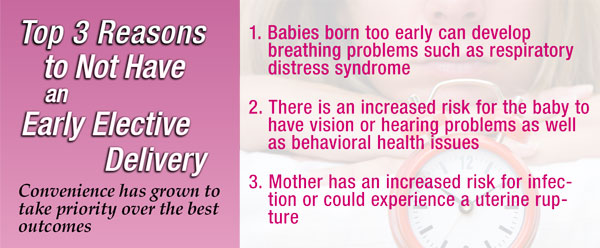
Women should understand the risks of having an early elective delivery. Numerous studies show early elective deliveries are associated with increased maternal and neonatal complications for both mothers and newborns, compared to deliveries occurring beyond 39 weeks and women who go into labor on their own.

Partner with your doctor or caregiver to create a birth plan
Developing a birth plan is a great way to make sure you have considered all your options about pregnancy, labor and delivery. This also allows you to share your expectations and desires with your health care provider.
Use the resources on this page to help develop your birth plan. You can also ask your doctor or caregiver to help you.

 Text 4 Baby is a free text messaging system that gives mom health tips dependent upon her time in pregnancy. The texts continue up until your baby is one year old. Click here to sign up.
 Join us on our Healthy Babies, Healthy Pregnancies Facebook page
Create a fun movie ! Take daily photos and create your own feature film
 The MBGH "Preventing Early Elective Deliveries (EED) Project
The Midwest Business Group on Health (MBGH) leads the EED Project as a collaborative to reduce or eliminate early elective deliveries in Illinois. The EED Project has the following components:
- Educating consumers through TV, the Internet and social media about the risks of non-medically related, early elective deliveries
- Educating employers on how to help their covered populations improve the maternity care they receive
- Working with hospitals, physicians, health plans, government entities, media, community groups and employer organizations to educate providers and others about the rate of EEDs, how this can be reduced and how consumers can identify higher quality providers